Facebook
 X
 Pinterest
 Copy Link

October 14, 2026
When it comes to spending your hard-earned money, you want to stretch each dollar as far as it will go. You want good value. You want more for less. You want to get the “best bang for your buck”. Seems fair and reasonable. After all, those who have something to sell, want the complete opposite. They want you to spend more and give you less. Just look at the size or weight on a bag or a box of most grocery items, then look at the price on the shelf. It just doesn’t add up. The price has increased, but the quantity has decreased. Some call it “shrinkflation”. Others call it “highway robbery”. Either way, the math isn’t mathing.

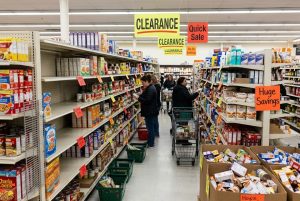
But you have a choice. In fact, you have many choices. You can pay the price posted on the shelf, simply because you love that product and can’t live without it. Or you can do some research and look for better value at a lower price at another store. You can even say “no way” and walk away, refusing to pay ridiculous prices for products you can live without. If enough people do that, market prices start to change. Not because the sellers of those products want to lower the price, but because they have to lower the price. Otherwise, their inventory sits on the shelf collecting dust, going stale, and eventually landing in the clearance aisle. It happens every day in grocery stores. It happens every day in real estate.
Are we comparing apples to apples?
Not exactly, but the law of supply and demand always prevails. During COVID … I know, that’s a nasty word that we are all tired of hearing … but at that time, housing supply was low, and demand was high. So high that buyers were paying tens of thousands, in some cases hundreds of thousands above “asking price” for homes. REALTORS® didn’t make them do it. No one made them do it. Home buyers made that choice. In fact, so many home buyers made that choice that they drove housing prices through the stratosphere. But since then, “the market” has changed. Prices have come down. Balance is being restored.

Once again, REALTORS® didn’t make this choice. The market decided; and when we say “the market” we really mean “buyers and sellers”. As of this writing, today’s market is leaning towards a buyer’s market. Supply outweighs demand. Time is on the buyers’ side. They can do their homework. They can shop around. They have real negotiating power. Conditional offers are back, and if they aren’t happy with the price, they are willing to say “no way” and walk away.
Let’s be real. Consumers have access to more information than ever in the history of the world. And right now, if you’re a seller, you need to understand that your house is being compared to many other properties, including those recently sold and others currently active on the market. Buyers can see which homes have sold, and at what price. They can also see the homes that are priced too high, going through price reduction after price reduction, sitting on the market, going stale, and being passed by with the click of a mouse. Simply put, buyers are more patient and willing to wait for the right house at the right price.

Let’s go back to the grocery comparison. Shoppers are going up and down the aisles, comparing sizes, quality, ingredients and price. They can even skip the brick-and-mortar experience and shop online for the same or similar product at a better price without leaving the comfort of their home. All of this information is within reach, just a Google search away. Put yourself in the buyer’s shoes. You walk into a grocery store, except this store only sells houses. Each aisle is labeled with specific price ranges. For example, $300K to $400K, $401K to $500K, $501 to $600K, etc. You’re a curious buyer, so you decide to go “window shopping”, starting with homes in the most expensive aisle. It’s fun to dream, but eventually reality sets in and you make your way up and down the more affordable aisles. Just like you can shop for homes on Realtor.ca, this grocery store has everything in-stock, on full display with “asking prices” clearly labelled. You will be looking at photos. You will be comparing features and sizes. You will be weighing the pros and cons of any of those properties that catch your eye. The difference here is unlike a grocery store, you can negotiate the pricing.

If you have done the right thing, and secured a mortgage pre-approval, you will know how much you can afford. You will notice that some houses are probably fairly priced, yet very expensive and out of your price range. Sure, they are nice to look at for comparison’s sake, but you eventually put them back on the shelf. Some houses you will look at and think these are just way over-priced. Even if you could afford them, you would never pay the “asking price”, and the seller likely wouldn’t entertain what some consider a “low ball offer”. Some houses you will look at and realize there are some good deals to be had, and you put a few in your cart for consideration. And finally, you see the clearance aisle. You can see stickers on top of older stickers, with prices reduced to sell. These houses have been sitting in on the shelf for months, perhaps even years. Some look dusty and damaged. While some still look pretty in the packaging. But you can’t help but wonder, “Is there something wrong with it?” or “If I come back next week will it be even cheaper?”.

Now flip the script. You have decided to sell your house. Your REALTOR® does a comparative market analysis and gives you a recommended list price. It is based on real numbers from recently sold comparable properties, with consideration of current active listings, your direct competition. You don’t agree with the price you have been provided. You believe your home is worth much more. You insist on a listing at a much higher price. Despite the market research, despite their better judgement, your REALTOR® agrees to list at your “asking price”, not because they believe they can get it, but because when they represent you, they work for you. Your REALTOR® has a fiduciary duty to follow any “lawful” instructions you ask them to do in relation to the sale of your home, and over-pricing a property is not against the law. It may not be the wisest choice, but it’s not against the law.
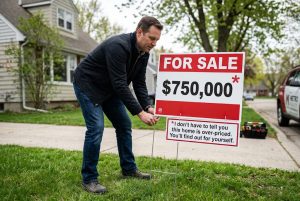
While you may get some eyeballs at first, eventually you stop getting inquires. You stop getting showings. You don’t receive any offers, or least any offers that you are willing to entertain. At this point, you reluctantly agree to lower the price. Not as much as your REALTOR® recommends, but just enough that you believe will spark renewed interest. But since it’s still over-priced based on current market research and comparables, the same thing happens again, and again. So, you terminate the listing and relist again at a lower price than the original listing, but still not in the range recommended by your REALTOR®. This pattern can repeat itself many times over. In fact, there are many properties currently on-the-market that are caught in this cycle, chasing down the market with every price drop.
 If you are seriously motivated to sell your property you continue to reluctantly reduce the “asking price” bit-by-bit over time, until the “asking price” eventually falls into the range of the initial opinion of value you were provided by your REALTOR®. One that was based on diligent market research and real concrete facts. What happens now, is your home ends up in the clearance aisle, with buyers asking “What’s wrong with this house?”, eventually and most likely selling for less than you could’ve earned had it been priced right from the start.
That’s what’s happening right now in the real estate market. Too many Sellers are planting their feet firmly in the soil, insisting on a price based on personal feelings, emotions, and attachment; opinions from family, friends or neighbours; or how much money they invested in renovating their homes.
None of that truly matters. Value is in the eye of the beholder.

Remember what happened during COVID and put it into perspective today. People will still only pay what they are willing to pay. These numbers are tracked and recorded locally, regionally, provincially and nationwide. Patterns always emerge. Statistics tell the tale. Your REALTOR® has access to all of this information, and you do too. The only difference is a good REALTOR® has the knowledge and experience to analyze and interpret that data, and help you zero in on a competitive listing price. But in the end, it will always be your choice.
So, ask yourself;
“Do I want to list my home to list it? Or do I want to list my home to sell it?”
If the price is right, your home will shine on display, in the right aisle, and it will attract serious buyers right from the start. Or you can insist on listing higher, and wait it out. Beware though, if the price is wrong, you could end up in the clearance aisle for a long time. If you’re a buyer or seller, and you want expert advice on pricing, give me a call, send me a text or shoot me an email. I’d be happy to provide a free consultation and opinion of value.
Rob Seguin | REALTOR® | 705-772-8230
Century 21 United Realty Inc. Brokerage
rob.seguin@century21.ca | ReachRob.ca